Iron IV Drip: How It Works and Who Needs It?
August 18, 2026
Rabies Immunoglobulin: Uses, Timing & RIG Guide
September 16, 2026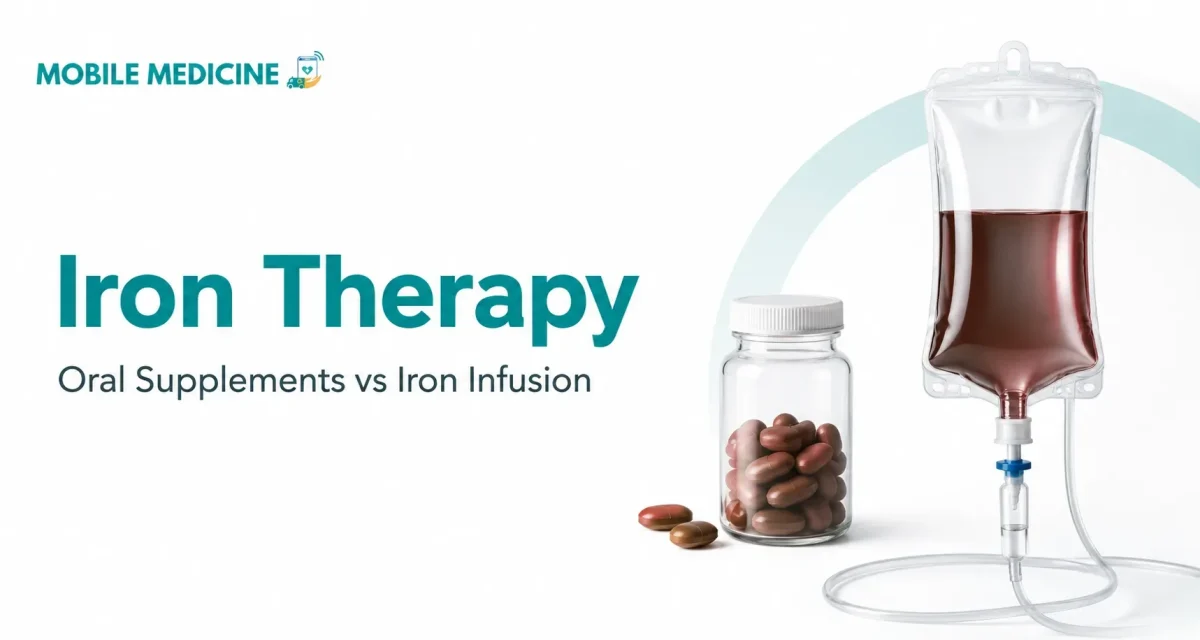
Iron deficiency is one of the reasons people may experience persistent tiredness, weakness, dizziness, shortness of breath, or reduced exercise tolerance. When blood tests confirm that iron levels are low, iron therapy may be recommended to help restore the body’s iron stores.
Two common approaches are oral iron supplements and intravenous iron infusion. Both aim to replace iron, but the way they are administered, how quickly they work, their potential side effects, and the situations in which they are used can be different. Understanding these differences can help you have a more informed discussion with your healthcare provider.
What Is Iron Therapy?
Iron therapy refers to medical treatment used to replenish iron when the body does not have enough to meet its needs. Iron is required to produce hemoglobin, a protein in red blood cells responsible for carrying oxygen around the body.
Treatment should generally be based on appropriate medical assessment and blood testing rather than symptoms alone. Iron deficiency can have several underlying causes, including inadequate dietary intake, blood loss, increased iron requirements, or difficulty absorbing iron from the digestive system.
Also read: Iron Infusion: Benefits, Procedure, and Side Effects
What Are Oral Iron Supplements?
Oral iron supplements are tablets, capsules, or liquid preparations taken by mouth. They are commonly considered an initial treatment option for uncomplicated iron deficiency because they are relatively convenient and do not require intravenous access.
After being swallowed, the iron passes through the digestive system and must be absorbed through the intestine before it can be used by the body. Treatment usually needs to be continued according to a healthcare provider’s recommendation to restore both hemoglobin and iron stores.
Benefits of Oral Iron Supplements
The main advantage of oral iron is convenience. It can usually be taken at home and does not require an IV procedure or appointment for every dose.
Oral iron is also generally less costly than intravenous treatment and can be effective when the digestive system absorbs iron normally and the patient can tolerate the medication. For these reasons, oral iron is often considered first line therapy in uncomplicated iron deficiency.
Possible Side Effects of Oral Iron
The main limitation of oral iron is gastrointestinal side effects. Some people experience nausea, abdominal discomfort, constipation, diarrhea, or changes in stool color.
These effects may make it difficult for some patients to continue taking supplements consistently. In other situations, a person may take oral iron as recommended but still fail to achieve an adequate improvement because of poor absorption or ongoing iron loss.
What Is an Iron Infusion?
An iron infusion delivers iron directly into the bloodstream through an intravenous line. Because it bypasses the gastrointestinal tract, the body does not depend on intestinal absorption to receive the iron.
IV iron is generally considered in specific clinical situations rather than simply being a stronger alternative to iron tablets. Patients who have been medically assessed as suitable for intravenous treatment can learn more about Iron Infusion at Mobile Medicine.
When Is Iron Infusion Considered?
Healthcare professionals may consider IV iron when oral therapy cannot be tolerated, does not produce an adequate response, cannot be absorbed effectively, or when faster iron replacement is clinically necessary.
Intravenous iron may also be appropriate in certain patients with conditions associated with impaired absorption or continuing iron loss. The decision should be individualized based on laboratory results, medical history, underlying cause of deficiency, and treatment response.
Also read: Iron IV Drip: How It Works and Who Needs It?
Oral Supplements vs Iron Infusion: How Are They Different?
The biggest difference is how iron enters the body. Oral supplements must pass through the gastrointestinal system, while an infusion delivers iron directly into a vein.
Oral iron can be convenient for long term use when it is well tolerated. An iron infusion requires administration by healthcare professionals but avoids gastrointestinal absorption and can deliver a substantial amount of iron during a treatment session.
| Comparison | Oral Iron Supplements | Iron Infusion |
|---|---|---|
| Administration | Taken by mouth | Given intravenously |
| Location | Usually taken at home | Administered under medical supervision |
| Absorption | Depends on the digestive system | Bypasses gastrointestinal absorption |
| Common concern | Digestive side effects | Infusion related reactions |
| Convenience | Convenient for daily treatment | Requires IV administration |
| Suitable for | Many uncomplicated cases | Selected patients based on clinical need |
Which Iron Therapy Works Faster?
IV iron can replenish available iron more directly because it bypasses gastrointestinal absorption. However, receiving iron intravenously does not mean that symptoms such as fatigue disappear immediately.
The body still needs time to use the available iron for processes such as producing new red blood cells and hemoglobin. The response to either form of iron therapy depends on the severity of the deficiency, its underlying cause, and the individual’s medical condition.
Is Iron Infusion Better Than Iron Tablets?
Not necessarily. There is no single iron therapy that is automatically best for everyone. Oral iron may be an effective and convenient option for one person, while intravenous iron may be more appropriate for another.
Choosing IV treatment simply because it appears faster or more powerful is not recommended. Medical professionals consider laboratory results, symptoms, previous treatment, tolerance, absorption, and the underlying cause of iron deficiency before selecting therapy.
Why Blood Tests Matter Before Iron Therapy
Symptoms such as fatigue, weakness, dizziness, and difficulty concentrating are not unique to iron deficiency. They can be associated with many different medical conditions.
Blood testing can help determine whether iron deficiency is actually present. Depending on the clinical situation, doctors may evaluate a complete blood count, hemoglobin, ferritin, and other iron related measurements. Mobile Medicine provides Laboratory Services in Bali, including complete blood count testing as part of its available clinical pathology services.
What If Oral Iron Does Not Improve Your Levels?
If blood tests remain abnormal despite taking oral iron correctly, simply increasing supplementation without medical assessment may not solve the problem. A healthcare professional may need to investigate whether there is poor absorption, continuing blood loss, inflammation, or another condition contributing to the deficiency.
Depending on the findings, the treatment plan may be adjusted or intravenous iron may be considered. Identifying and managing the cause of iron deficiency is an important part of treatment rather than focusing only on replacing iron.
Safety Considerations for Iron Infusion
Modern IV iron preparations are widely used, but intravenous treatment can still cause side effects. Patients may experience temporary symptoms such as headache, nausea, flushing, dizziness, changes in blood pressure, or discomfort around the infusion site.
Hypersensitivity reactions can also occur, including rare serious reactions. This is one reason IV iron should be given in a setting where healthcare professionals can monitor the patient and provide appropriate treatment if a reaction occurs.
How Do Doctors Choose the Right Iron Therapy?
The choice between oral and intravenous iron is not based on one factor alone. A healthcare provider may consider the severity of deficiency, laboratory results, symptoms, digestive tolerance, absorption, previous response to therapy, ongoing medical conditions, and how urgently iron needs to be replaced.
If you are unsure whether your symptoms may be related to iron deficiency, a Doctor Consultation in Bali can help determine whether blood testing or further assessment is appropriate. Mobile Medicine provides homecare and telemedicine consultation services in Bali.
Iron Therapy in Bali with Mobile Medicine
For people living in or traveling around Bali, dealing with persistent fatigue or suspected iron deficiency can be inconvenient, particularly when laboratory testing and treatment are required.
Mobile Medicine provides laboratory testing, medical consultation, and iron infusion services in Bali. If tests confirm iron deficiency, a healthcare professional can evaluate your condition and determine whether oral supplementation, intravenous iron, further investigation, or another approach is appropriate.
WhatsApp: +62 812 5263 8533
View this post on Instagram
Frequently Asked Questions About Iron Therapy
Which is better, oral iron or iron infusion?
Neither option is universally better. Oral iron is suitable for many uncomplicated cases, while an iron infusion may be considered when oral supplements are not tolerated, inadequately absorbed, ineffective, or otherwise unsuitable.
Can I choose an iron infusion instead of taking tablets?
The treatment should be selected based on your medical condition rather than preference alone. A healthcare provider can determine whether IV iron is appropriate after reviewing your symptoms, laboratory results, medical history, and previous treatment.
Why do iron tablets sometimes not work?
Possible reasons include poor absorption, difficulty taking the medication consistently because of side effects, continued blood loss, or an underlying medical condition affecting iron metabolism. Further medical assessment may be necessary if iron levels do not improve.
Does an iron infusion increase energy immediately?
Not necessarily. The iron is delivered directly into the bloodstream, but the body still requires time to use it in red blood cell and hemoglobin production. How quickly you notice improvement varies between individuals.
Should I have a blood test before taking iron?
Testing can be important when iron deficiency is suspected because symptoms such as fatigue are not specific to low iron. A healthcare professional can determine which blood tests are appropriate and whether iron replacement is necessary.